
Quick Overview
- Red light therapy is known to boost collagen production and cellular repair, which can help reduce wrinkles and improve skin elasticity
- It works by penetrating skin layers with specific wavelengths (630-700nm) that energize mitochondria and boost cellular regeneration
- Not only does it have anti-aging benefits, but red light therapy can also help heal acne, reduce scarring, and soothe inflammatory skin conditions like rosacea and eczema
- Both professional treatments and at-home devices can deliver results, but consistency is key with visible improvements typically appearing after 4-12 weeks
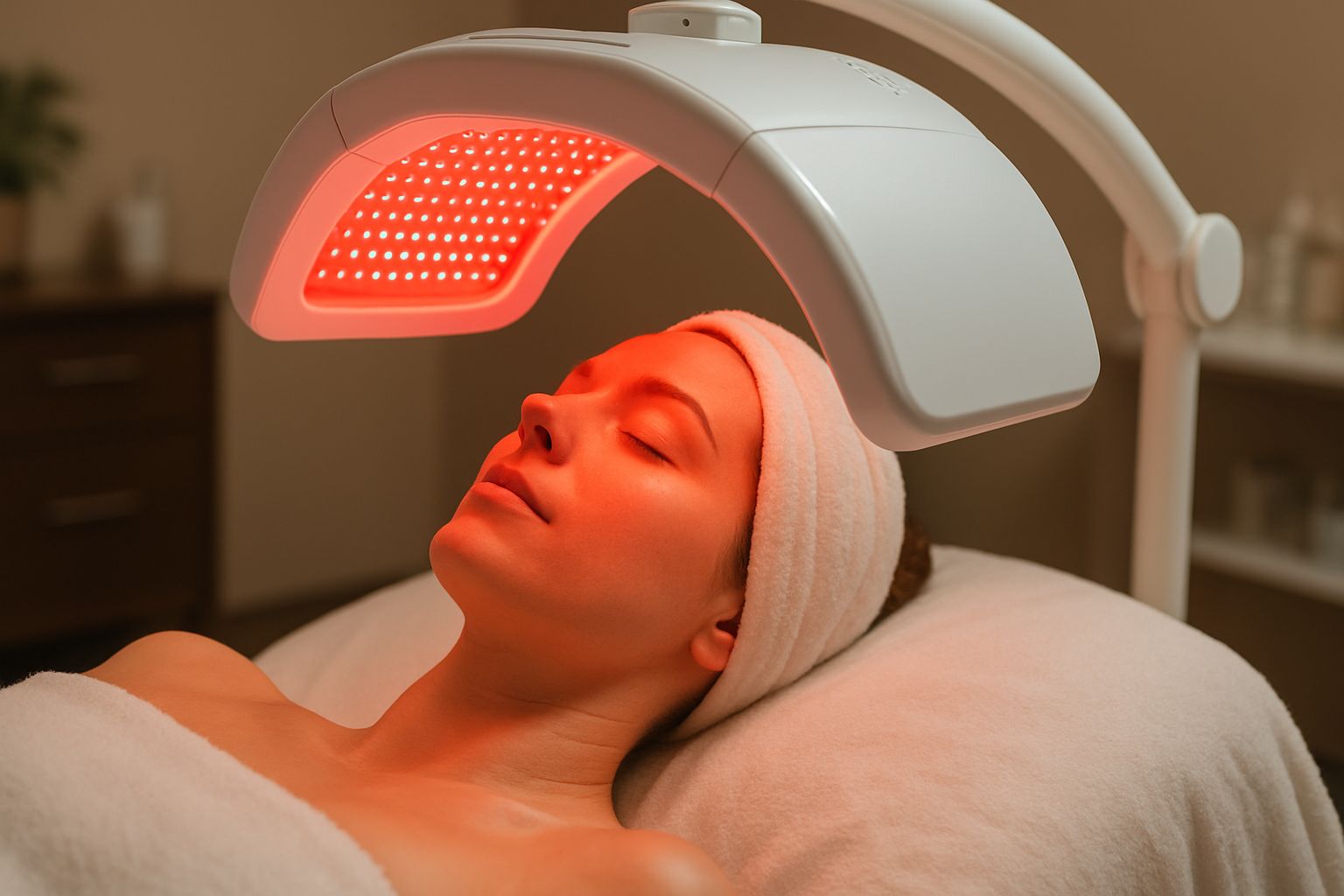
Red light therapy is quickly becoming a popular skin treatment for those looking to rejuvenate their skin naturally. This non-invasive approach uses specific wavelengths of red light to penetrate skin layers and trigger cellular healing processes.
Unlike harsh chemical treatments or abrasive procedures, red light therapy works with your body’s natural mechanisms to improve skin health from the inside out.
Experts at many spas have witnessed some truly amazing changes in their clients’ skin thanks to regular red light therapy sessions.
What’s so wonderful about this treatment is how it gently but effectively tackles a range of skin issues at once, from signs of aging to stubborn skin conditions that don’t seem to respond to conventional treatments.
The Real Impact of Red Light Therapy on Your Skin
“Viconor Red Light Therapy for Face,Red …” from www.ebay.com and used with no modifications.
Red light therapy is more than just a passing beauty fad – it’s a scientifically proven treatment that provides genuine benefits for your skin.
What red light therapy does is it uses low-level wavelengths of red light that go beneath the surface of your skin to stimulate cells, increase circulation, and initiate natural healing processes.
Unlike UV rays which harm skin, these particular wavelengths of light (usually 630-700 nanometers) help to restore and rejuvenate skin tissue without causing any damage.
These light waves penetrate your skin cells and are absorbed by the mitochondria – the energy-producing powerhouses found in each cell.
This absorption process triggers a series of positive reactions such as;:
- increased ATP (cell energy) production
- improved blood circulation
- collagen production stimulation
- inflammation reduction
- tissue repair acceleration.
The outcome is not just better-looking skin but also skin that functions better at a cellular level.
What’s striking about red light therapy is its multi-tasking abilities. It can tackle several issues at once – firming up loose skin, lightening age spots, smoothing out roughness, calming redness, and giving you a younger look overall.
Plus, while many harsh treatments work by purposely causing damage, red light therapy does the opposite. It heals and fortifies your skin with each treatment.
Understanding the Scientific Basis of Red Light Therapy’s Skin Benefits
Red light therapy is not just a fad – it has a strong scientific foundation. The skin absorbs certain wavelengths of red light and this triggers a process called photobiomodulation.
This is where light energy is converted into cellular energy. This is not about heat (like infrared saunas) or UV exposure (like tanning) – it’s about providing the exact light energy that your cells can use for repair and regeneration.
How Red Light Wavelengths Reach Deep into Skin Layers
Red light therapy is effective because the wavelengths used, typically between 630-700nm, are able to go beyond the epidermis (outer skin layer) and reach the dermis where collagen and elastin fibers are found.
This ability to penetrate is what makes it different from other topical treatments that only affect the skin’s surface.
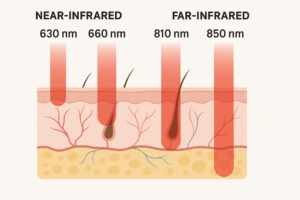
Different wavelengths reach different depths – for example, the 660nm wavelength is great for surface issues like texture and tone, while the slightly longer 850nm wavelength (in the near-infrared spectrum) reaches deeper tissues to address structural issues.
This therapy gently penetrates the skin layers without causing any harm or discomfort, making it one of the most delicate and effective skin therapies out there.
As it works at the cellular level, not just the surface, the improvements you see are a result of genuine healing and regeneration, not just temporary cosmetic effects.
How Red Light Therapy Energizes Your Cells
Red light therapy works its magic by interacting with the mitochondria in your skin cells. These are the parts of the cell that generate energy. They contain photoreceptors that can absorb the photons in red light, which causes them to produce more adenosine triphosphate (ATP). ATP is like the energy currency for your cells. When your cells have more ATP, they can work more efficiently, produce more collagen and elastin, repair themselves more quickly, and even live longer.
The boost in mitochondrial activity is the key to understanding why red light therapy is so beneficial for a variety of skin conditions. When your skin cells are energized, they can perform their functions more effectively, from maintaining the skin barrier to producing collagen to controlling inflammatory responses. Studies have shown that red light therapy can increase energy production in cells by up to 200%, essentially supercharging your skin cells’ ability to self-maintain and self-repair.
One of the most interesting things about this cell stimulation is the release of nitric oxide, which increases blood flow to the areas being treated. More blood flow means that more oxygen and nutrients are getting to your skin cells, which helps them heal and regenerate more effectively. This increased circulation also helps to get rid of waste products and toxins more efficiently, which makes the skin healthier overall.
How Red Light Therapy Differs From Other Light Therapies
Don’t mistake red light therapy for other light-based treatments, as each one has its own unique purpose. Blue light therapy is great for targeting the skin’s surface and killing bacteria that cause acne, but it doesn’t penetrate deep enough to stimulate collagen. Yellow light is useful for dealing with redness and inflammation, but it only works on the surface. Infrared light penetrates deeper than red light, but it primarily delivers heat to tissues instead of light energy.
The uniqueness of red light lies in its perfect placement on the light spectrum – it’s deep enough to touch cells that produce collagen but not so deep that it mainly generates heat. It’s also crucial to differentiate red light therapy from laser treatments. Laser treatments function by causing controlled harm to incite healing. In contrast, red light therapy stimulates cellular repair directly, without any damage phase.
Best Anti-Aging Benefits of Red Light Therapy
Red light therapy is an amazing solution for those looking to reverse the aging process without the downtime or risks of more invasive procedures.
 The anti-aging benefits go beyond skin-deep – they are actual structural improvements in the health and function of your skin. As we get older, our cells naturally produce less collagen and cellular energy, leading to the visible signs of aging we all fight against.
Boosting Collagen Production
Collagen is a crucial component of your skin, accounting for around 80% of its structure. It gives your skin its firmness and support. However, once we hit 25, we start to lose about 1% of our collagen every year.
This leads to sagging skin and wrinkles. Red light therapy stimulates the fibroblast cells, which produce new collagen and elastin fibers.
Clinical studies have shown that regular red light therapy can significantly increase collagen density. Some studies have even shown an increase of up to 31% after just 12 weeks of treatment.
As we age, our fibroblast cells, which are responsible for producing collagen, become less active. Red light therapy stimulates these cells, encouraging them to produce more collagen.
The collagen produced in this manner is more structured and organized than the fragmented collagen often found in aged skin. This not only increases the amount of collagen in the skin but also improves its quality, resulting in a more youthful appearance.
Minimizing Fine Lines and Wrinkles
Thanks to the increase in collagen and cellular energy, your skin will look smoother and have less noticeable lines and wrinkles.
Red light therapy is especially good at treating crow’s feet, forehead lines, and nasolabial folds (smile lines).
According to a study in the Journal of Photomedicine and Laser Surgery, participants saw a major decrease in the depth of their wrinkles after only 12 weeks of red light therapy treatments.
What’s really impressive about the anti-wrinkle effects of red light therapy is how deep they go.
While surface treatments might give the skin a temporary plumpness or affect its surface texture, red light therapy actually rebuilds the foundation that keeps wrinkles from forming to begin with.
Users often say their skin not only appears smoother, but also feels denser and more resistant to new wrinkles.
Boosting Skin Firmness and Elasticity
Aside from reducing wrinkles, red light therapy significantly boosts the overall firmness and elasticity of the skin – that youthful “snap-back” quality that lessens as we age.
This occurs because red light incites the production of both collagen (which gives structure) and elastin (which gives flexibility). Moreover, the enhanced cellular function results in better hydration retention and stronger bonds between skin cells.
Red light therapy tends to show the most noticeable firming effects on the jawline, neck, and other areas that are more likely to sag due to gravity.
Many people have noted a slight but noticeable “lifted” look after several weeks of regular use. This improvement in the structure of the skin provides a foundation for long-term anti-aging benefits that go beyond what can be achieved with only topical products.
What to Expect: A Practical Timeline for Results
Red light therapy offers undeniable anti-aging benefits, but it’s important to have a clear understanding of the timeline for results to keep expectations in check.
Most people start to see slight improvements in skin texture and radiance after only 2-3 sessions. More noticeable changes in firmness and fine lines usually start to show after 4-6 weeks of regular treatment.
The most significant transformations – such as deeper wrinkle reduction and increased skin elasticity – typically become apparent after 8-12 weeks of consistent sessions.
It’s important to remember that the outcomes continue to get better over time because the process of collagen remodeling is slow. Most people say they notice the most improvement 3-6 months after they start treatment.
Also, it’s important to keep having treatments to keep the improvements you’ve made and make more. The best part is that these improvements are real changes in your skin, not just temporary changes that go away when you stop treatment.
Testimonial: “I was unsure about red light therapy at first, but after 8 weeks of treatments twice a week, even my husband noticed my skin was tighter and more vibrant. The small wrinkles around my eyes have significantly reduced, and my makeup applies much smoother now. The best part is that my results keep getting better the longer I continue with treatments.” – Sandra, 56
Advantages for Skin Healing and Repair
Red light therapy doesn’t just have anti-aging benefits. It’s also a powerful tool for repairing damaged skin. The same process that stimulates collagen production also speeds up your skin’s natural healing processes.
This makes red light therapy a great choice for addressing specific skin concerns like inflammation, tissue damage, or impaired healing responses.
How Red Light Therapy Helps with Acne and Scars
Red light therapy can help with acne and scarring in two ways. First, it can decrease inflammation that leads to active breakouts by calming down the immune responses in your skin that are too active.
Second, it can speed up the healing of current blemishes, which means there’s less time for scars to form. If you already have acne scars, red light therapy can stimulate collagen remodeling that can greatly improve how they look over time.
Research has shown that consistent use of red light therapy over 4-8 weeks can decrease acne lesions by 46-76%. It’s especially potent when paired with blue light therapy, which eradicates the P. acnes bacteria that cause breakouts.
Red light’s anti-inflammatory characteristics also help lessen the redness and discomfort of cystic acne, making it a mild alternative for those who can’t handle harsh topical treatments.
Undoing Sun Damage
Red light therapy is a game-changer for sun-damaged skin. It stimulates the body’s own cellular repair mechanisms, which are specifically designed to target damage caused by UV rays.
By increasing circulation to sun-damaged areas, red light therapy delivers more oxygen and nutrients to help speed up the healing process. And unlike many aggressive treatments for photoaging, red light therapy does all of this without causing any further trauma to the skin.
Regular red light therapy sessions can help reduce sun spots, enhance skin texture, and restore the elasticity that UV radiation has damaged.
This therapy is especially effective in treating the crepey skin texture that often develops after years of sun exposure, particularly on the chest, neck, and hands.
Many people notice a more even skin tone and reduced appearance of sun spots after 8-12 weeks of consistent treatments.
Faster Healing of Wounds
Red light therapy is scientifically proven to speed up the healing of wounds by as much as 200% in some cases.
The energy from the light stimulates fibroblast activity, boosts blood flow to the wound, and reduces inflammation markers that can slow down healing. If you have wounds that are healing slowly or if you’re recovering from a procedure, red light therapy can significantly cut down the time it takes to heal and can improve the way scars look when they’re fully healed.
The fast-acting healing properties of red light therapy make it a great tool for recovery following skin treatments like micro-needling, chemical peels, or laser procedures.
A growing number of dermatologists are now using red light therapy sessions directly after these treatments to reduce recovery time and improve the results.
Combining treatments that stimulate collagen through controlled damage with red light therapy, which enhances repair mechanisms, leads to mutually beneficial results for skin rejuvenation.
Using Red Light Therapy for Skin Problems
Red light therapy isn’t just for cosmetic improvements. It can also be a major help for people who have chronic skin conditions.
Red light therapy is anti-inflammatory, which is a big deal for conditions that involve long-term inflammation and problems with the immune system. For a lot of people, red light therapy is a nice alternative or addition to medications that might have side effects they don’t want.
Calming Rosacea and Redness
If you have rosacea, you know how tough it can be to find a treatment that doesn’t cause a flare-up.
Red light therapy is a gentle alternative that works by strengthening the walls of your capillaries, reducing inflammation-causing cytokines, and bringing your skin’s blood flow patterns back to normal. With regular sessions, you can greatly reduce the chronic redness, flushing, and visible blood vessels that are typical of rosacea.
Research has found that red light therapy can decrease rosacea symptoms by 20-40% after only 4-8 weeks of regular treatment. Many people have found that they have less flare-ups and can handle common triggers better after they have been using red light therapy regularly.
This treatment works so well because it treats the inflammation that causes rosacea without irritating the sensitive skin that is prone to rosacea.
Dealing with Eczema and Psoriasis
Red light therapy is a godsend for people dealing with eczema and psoriasis flare-ups, thanks to its anti-inflammatory effects. It helps to soothe the skin by controlling immune responses and reducing inflammation, which are both common symptoms of these skin conditions.
Furthermore, red light therapy can also help repair damaged skin by improving blood flow and encouraging cellular repair, which is particularly helpful for eczema patients who often have compromised skin barriers.
Red light therapy aids in the treatment of psoriasis by regulating the rapid cell turnover rate that results in characteristic plaques.
It also assists in the repair of cracked or damaged skin and reduces the severe itching associated with both conditions.
Many patients with chronic inflammatory skin conditions have reported longer periods between flare-ups and less severe symptoms when they consistently include red light therapy in their treatment regimen.
Calming Sensitive Skin
If you have sensitive skin that reacts badly to most treatments, you’ll be pleased to know that red light therapy is both effective and non-irritating.
It strengthens the skin’s protective barrier, reduces neurogenic inflammation (which causes stinging and burning sensations), and helps to restore normal skin function. People with sensitive skin often find that they can tolerate more active skincare ingredients after they’ve been using red light therapy regularly.
Even when your skin is at its most sensitive during active flares, the gentle nature of the therapy makes it suitable.
Many people with sensitive skin have reported that red light therapy sessions give them immediate relief from discomfort and gradually increase their skin’s resilience over time.
If your skincare options are severely limited by reactivity, red light therapy could be a game-changer for you, helping to expand your tolerance and improve your overall skin health.
Getting the Most Out of Red Light Therapy
 To really reap the rewards of red light therapy, you need to know how to use it properly.
The distance from the device during treatment, how long each session lasts, how often you use it, and the quality of the device itself can all affect your results.
But with the right strategy, you can see major improvements in your skin and avoid the usual mistakes that can make the therapy less effective.
Comparing Professional and At-Home Devices
Professional red light therapy devices usually pack more punch and distribute light more evenly than at-home versions. Treatments done in a professional setting often use panels with hundreds or even thousands of LED bulbs, arranged to provide full coverage of the treatment area.
Because they have higher energy output, professional sessions can be shorter but yield more dramatic results. Plus, trained professionals can adjust the settings to address your specific skin issues.
There are a variety of at-home devices that you can choose from. They range from handheld wands to masks to larger panels.
While these are convenient, they generally have lower power output. This means that you may need to use them for longer or more frequently to achieve similar results to professional treatments.
When you are selecting a home device, look for options that are FDA-cleared. You should also look for ones with clearly stated wavelengths. Ideally, these should be 630-660nm for surface concerns and 810-850nm for deeper tissue. The best devices will specify their power output in mW/cm². Higher numbers indicate a more powerful treatment.
Comparing Devices: Professional LED panel treatments usually provide 100-150 mW/cm² of power, while high-quality home devices often range from 20-100 mW/cm². This difference in power indicates that a 10-minute professional session could be equivalent to a 20-30 minute home treatment in terms of the light energy delivered.
How Often and How Long Should You Use Red Light Therapy?
The key to seeing real results is consistency, not intensity. The majority of studies that showed notable benefits used treatment plans of 2-3 sessions per week for 8-12 weeks.
Each session usually lasts between 10-20 minutes, depending on the power output of the device. Once you’ve reached your goal, maintenance sessions 1-2 times weekly can help maintain and even increase the benefits over time.
When you first start using red light therapy, it’s best to start with shorter sessions (5-10 minutes) and then gradually increase the length of your sessions as your skin gets used to the treatment.
It’s important to remember that more isn’t always better – if you exceed the recommended treatment times, you won’t get results faster. In fact, you could potentially reduce the effectiveness of the treatment through a biological process called photoinhibition.
The most important thing is to find a routine that you can stick to in the long term, as the benefits of red light therapy are cumulative and improve with ongoing use.
Incorporating Red Light into Your Skincare Regimen
Red light therapy is a fantastic addition to any skincare routine. For the best results, use your serums that contain active ingredients (particularly antioxidants such as vitamin C) right after red light treatment, when your skin is temporarily more permeable.
This timing boosts product absorption by as much as 80% according to some research. Avoid using heavy creams or oils before treatment, as they can prevent light penetration and decrease effectiveness.
A lot of skincare professionals suggest pairing red light therapy with other non-invasive treatments like microcurrent, gentle exfoliation, or hydrating masks for a boosted effect.
The cellular stimulation from red light therapy enhances the results of these complementary treatments.
For more intense procedures like chemical peels or microneedling, wait 24-48 hours before resuming red light therapy to avoid overstimulating sensitized skin.
Guidelines and Safety Measures
Red light therapy is generally safe, but following the right precautions can help you achieve the best results. You should always wear suitable eyewear during treatments, even though red light isn’t as harmful to your eyes as UV light.
It’s also important to keep the device at the recommended distance from your skin – usually 6-12 inches for panels and directly on the skin for masks or wands – to ensure the light penetrates properly without getting too hot.
Red light therapy is not suitable for everyone. Some medications and conditions can increase sensitivity to light therapies, including photosensitizing medications such as certain antibiotics and retinoids.
If you have a photosensitive condition like lupus or porphyria, you should speak to your doctor before starting red light therapy. The same applies if you have active skin cancers or suspicious lesions; these should be evaluated before you begin red light therapy treatments in those areas.
How Does Red Light Therapy Stack Up Against Other Anti-Aging Treatments?
When it comes to assessing the worth of red light therapy, it’s useful to compare it to other treatments.
A single professional chemical peel can cost between $150 and $300, laser resurfacing treatments start at about $1,000 per session, and injectable treatments like Botox or fillers cost anywhere from $400 to $2,000 per session, with results only lasting between 3 and 12 months.
On the other hand, once you’ve bought a high-quality red light device, the ongoing cost is minimal and the benefits keep piling up.
What makes red light therapy stand out is its ability to tackle multiple skin issues at once, rather than focusing on just one.
While Botox might help with wrinkles and chemical peels can improve texture, red light therapy can help with wrinkles, firmness, tone, inflammation, and overall skin health in every session.
This makes it a particularly cost-effective choice for people who want to improve their overall skin health rather than just fixing one issue.
Red Light Therapy: A Dermatologist’s Perspective
As more research has become available about the benefits of red light therapy, the medical community has begun to change its tune.
These days, it’s not uncommon for dermatologists to recommend red light therapy as part of a comprehensive skincare regimen, particularly for patients who prefer non-invasive treatments with little to no downtime.
This shift in perspective has moved red light therapy from the fringes of alternative medicine to a mainstay in dermatology offices around the globe.
Research Findings and Proof
The amount of research on the skin benefits of red light therapy has grown significantly in recent years.
A meta-analysis from 2018 published in the Journal of Photochemistry and Photobiology looked at 31 studies with over 1,000 participants and found consistent evidence that red light therapy is beneficial for skin rejuvenation, particularly for collagen density, reducing wrinkles, and skin texture.
Another important study from 2014 in Photomedicine and Laser Surgery showed a 31% increase in collagen density after 12 weeks of red light therapy, along with significant clinical improvements in how the skin looks.
Studies specifically looking into the use of red light therapy for inflammatory skin conditions have also shown promising results.
Several studies have shown a 50-70% reduction in symptoms in rosacea patients after 8-12 weeks of treatment.
For psoriasis, research suggests that red light therapy can reduce the thickness and scaling of plaques by 60-75% when used consistently, with some patients achieving almost complete clearance when used in combination with standard treatments.
Professional Advice and Considerations
Red light therapy is often seen by most dermatologists as a beneficial additional treatment rather than a substitute for a complete skincare regimen.
They usually suggest it in conjunction with suitable topical products, sun protection, and healthy lifestyle habits.
Many skincare professionals recommend red light therapy as an outstanding “intermediate treatment” between basic skincare and more invasive procedures, or as a maintenance therapy following more aggressive treatments.
Even though dermatologists recommend red light therapy, they also recognize its limitations. You won’t see results overnight; instead, you’ll need to stick to a regular treatment schedule to see gradual improvements.
This therapy is most effective for mild to moderate issues. If you have severe skin laxity or deep wrinkles, you might need a more aggressive treatment. Plus, your results can vary depending on factors like your age, the condition of your skin, and how your cells respond to light stimulation.
Many skin doctors suggest getting a professional assessment before starting treatment for the best results. This enables the creation of personalized treatment plans based on your unique skin issues and helps set realistic expectations.
Getting Started with Red Light Therapy
It’s important to note that you will see the best results with red light therapy when you use it regularly – consistency matters. Many people find that using it three to four times a week at first, then reducing to one or two times a week once they see improvements, works well.
It’s also a good idea to take photos every month in the same light to see how your skin is improving. It can be hard to see the changes day to day, but over time, you’ll notice a difference.
Some people say they see the most change after three to six months of regular use because it takes time for collagen to remodel.
Common Questions
As more people have started using red light therapy, there are a few questions that keep coming up. It’s important to answer these questions to make sure people know what they’re getting into and what they can and can’t expect from the treatment.
Keep in mind that the effects of red light therapy are both cumulative and progressive. Unlike some treatments that have immediate but fleeting results, red light therapy offers enduring improvements that only get better with continued use. This is what makes it a valuable component of a long-term skincare regimen, rather than a quick fix for special occasions.
Many people love using red light therapy because it feels like a pampering self-care ritual, not just another skincare chore.
The warmth of the light and the time dedicated to self-care offers stress-reduction benefits beyond the physical improvements to the skin.
Some practitioners even recommend using this treatment time for meditation or mindfulness practice to enhance overall wellbeing alongside skin health.
Can everyone use red light therapy, regardless of their skin type?
Yes, red light therapy is typically safe for all Fitzpatrick skin types (I-VI). There’s no risk of pigmentation changes or burns that can occur with other light-based treatments.
Unlike lasers or IPL which target specific chromophores in the skin, red light therapy works at the cellular level regardless of melanin content. This means it’s one of the few light-based therapies that’s equally suitable for very fair and very deep skin tones.
However, people who have certain photosensitive conditions (such as porphyria or lupus) or who are taking photosensitizing medications should talk to their doctor before starting treatment.
Even though red light doesn’t have UV radiation, the stimulation of cells could potentially cause flares in some photosensitive conditions. For most people who don’t have these specific concerns, red light therapy is one of the safest skin treatment options available with a very low risk of side effects.
When can you expect to see results from red light therapy?
Red light therapy results are not immediate; they gradually develop over time. Most users start to see initial improvements in the texture and glow of their skin after consistently using the therapy for 2-4 weeks.
More noticeable changes, such as increased firmness, reduced fine lines, and improved overall tone, usually become visible after 4-8 weeks of regular sessions. The most dramatic improvements, especially for deeper wrinkles or more serious issues like scarring or rosacea, generally appear after 8-12 weeks as the collagen remodeling and deeper healing processes progress.
Is it safe to use red light therapy while on medication?
Generally, red light therapy does not interfere with most medications. However, some photosensitizing drugs can cause complications. These include certain antibiotics (especially tetracyclines), some antipsychotic drugs, specific diuretics, and some acne treatments like isotretinoin.
If your medication has a photosensitivity warning, you should talk to your doctor before starting red light therapy. In many situations, you can still undergo treatment, but you may need to adjust the protocol, such as shortening the session or increasing the distance from the light source.
Can red light therapy improve hyperpigmentation?
Red light therapy can aid in the improvement of hyperpigmentation in a number of ways. It accelerates cellular turnover, allowing darkened surface cells to be shed more quickly.
The increased circulation it promotes helps to distribute melanin more evenly across the skin. Furthermore, by decreasing inflammation (a cause of post-inflammatory hyperpigmentation), red light therapy can prevent the formation of new dark spots.
Many experts suggest that for the best outcomes with hyperpigmentation, it’s best to pair red light therapy with specific ingredients such as vitamin C, niacinamide, or alpha arbutin.
The red light not only boosts the penetration and efficacy of these ingredients but also offers additional benefits. However, it’s worth noting that while red light therapy can greatly enhance most types of hyperpigmentation, very deep or long-term melasma might need more professional treatments for complete removal.
Consistent use of red light therapy over time has shown to be the most effective for hyperpigmentation. Most people notice a gradual fading of dark spots over 8-12 weeks of regular use, with continued improvement as maintenance sessions continue.
It’s important to note that sun protection is still necessary during and after treatment, as exposure to UV rays can counteract the benefits of red light therapy in evening out skin pigmentation.
Should I wear eye protection during red light therapy treatments?
Even though red light doesn’t harm retinal tissue like UV light does, most manufacturers and practitioners suggest wearing suitable eye protection during treatment.
This is especially crucial with high-powered devices or when the light source is positioned near the face. The brightness can be uncomfortable, and it’s generally a good idea to avoid long-term exposure to intense light of any wavelength for the sake of eye health.
Most professional-grade devices and high-quality home systems include specialized protective eyewear that is designed to block the specific wavelengths that the device uses.
These specialized goggles or eye cups are a better option than regular sunglasses, which might not be able to filter out the specific wavelengths that red light therapy uses. If your device didn’t come with eye protection, you can easily and affordably purchase blackout goggles that are designed for light therapy.
If you’re using red light therapy on parts of your body other than your face, you might not need to protect your eyes, but it’s still a good idea if the light is so bright that it’s uncomfortable to look at.
If you’re not sure, just do whatever your device’s instructions say. They might have special safety steps based on how bright the light is, how close you should be to it, and what kind of light it uses.